

Eba is a popular staple food in many West African homes, it is made from processed cassava flour (garri) mixed with hot water to form a smooth, dough-like consistency. While it is often seen simply as a filling accompaniment to soups, eba carries several nutritional and health benefits when consumed in moderation and paired with balanced meals.
Eba is rich in carbohydrates, which serve as the body’s primary energy source. This makes it especially beneficial for individuals with physically demanding lifestyles or anyone needing sustained energy throughout the day. A well-portioned serving can help maintain stamina and reduce fatigue.
For individuals with gluten intolerance or conditions like celiac disease, eba is a safe alternative to wheat-based foods. Since cassava is naturally gluten-free, it provides a suitable option for those who need to avoid gluten without sacrificing a satisfying, hearty meal. When properly processed.., cassava used for eba contains dietary fiber, which aids digestion as fiber helps regulate bowel movements, prevent constipation, and promote a healthy gut. When paired with fiber-rich soups like vegetable or okra soup, the digestive benefits are even more pronounced.
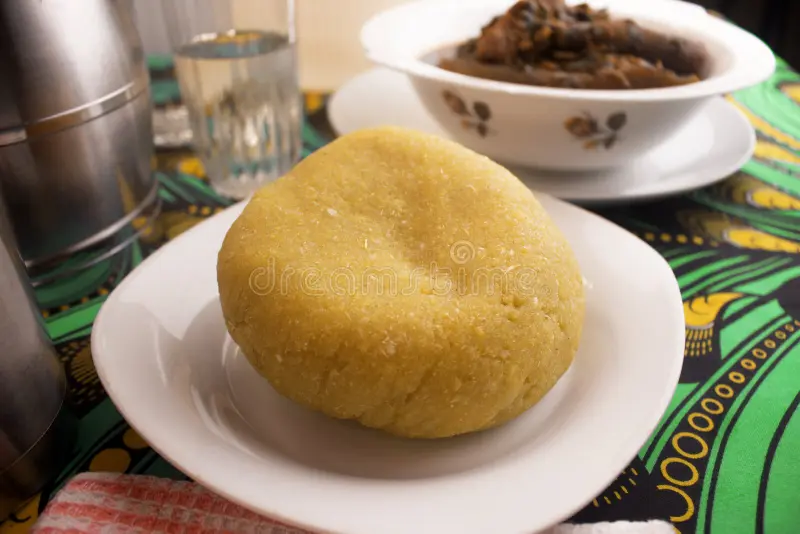
Eba itself is naturally low in fat, making it a good base for meals when trying to manage fat intake. The overall healthiness of the meal, however, depends on the type of soup and ingredients it is served with. Lean proteins and vegetable-based soups can turn eba into a well-balanced dish.
Cassava provides small but important amounts of minerals such as calcium, potassium, and magnesium. These nutrients support bone health, muscle function, and proper nerve activity. Though not abundant, they contribute to overall nutritional intake when eba is consumed regularly as part of a varied diet.
Eba is quite filling, which can help control hunger and reduce the likelihood of overeating. Its ability to promote satiety makes it useful for individuals trying to manage their weight—provided portion sizes are kept in check.
Beyond physical health, eba plays a role in cultural identity and emotional satisfaction. Eating familiar, traditional meals can contribute to mental well-being, providing comfort and a sense of connection to heritage and community.
While eba has its benefits, moderation is key. Excessive consumption, especially in large portions without balanced accompaniments, can lead to excessive calorie intake. Additionally, proper processing of cassava is essential to remove naturally occurring toxins.
Eba is more than just a staple food. It is a valuable source of energy, a gluten-free alternative, and a culturally significant meal. When paired with nutritious soups and eaten in moderation, it can be part of a healthy, balanced diet. The key lies not just in eating eba, but in how it is prepared, portioned, and complemented with other nutrient-rich foods.
Ahmodu Adeboye.






Leave a Reply