

International law scholar Professor Dapo Akande has been elected as a judge of the International Court of Justice (ICJ), following a voting process conducted by the United Nations General Assembly and Security Council.
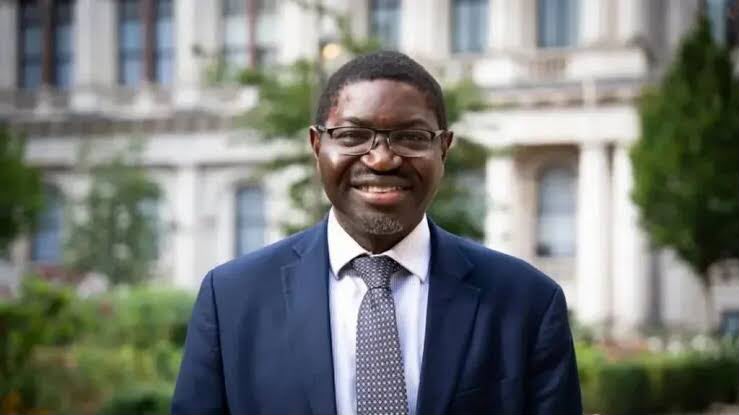
Akande emerged among the successful candidates during the November 3 election, securing the required majority in both United Nations bodies to obtain a position on the world’s principal judicial institution.
According to the official voting record of the UN General Assembly, Akande received 129 votes out of 191 valid ballots cast, exceeding the required absolute majority of 97 votes.
His election was subsequently confirmed after he also secured the necessary support in the UN Security Council.
The professor is a distinguished academic specialising in public international law and is associated with the University of Oxford, where he has taught and conducted research on international legal issues.
He has also served as a member of the United Nations International Law Commission, an expert body responsible for advancing the progressive development and codification of international law.
Akande’s election is particularly significant because of his extensive experience in international legal practice and scholarship.
The International Court of Justice, headquartered in The Hague, Netherlands, is responsible for resolving legal disputes submitted to it by countries and providing advisory opinions on legal questions referred to it by authorised United Nations institutions.
Its judges are elected independently by the General Assembly and Security Council and are expected to discharge their responsibilities without representing the interests of their respective countries.
Akande will serve a nine-year term beginning on February 6, 2027.
His emergence was welcomed by the British government, which described his election as an important development for international justice and the rule of law.
Although Akande’s election is being celebrated in connection with his Nigerian training and background, the official UN record identifies him as a candidate of the United Kingdom.
His appointment adds to the international profile of legal scholars with Nigerian connections and highlights the growing participation of African-trained professionals in global institutions.
Sources: United Nations General Assembly, UK Foreign, Commonwealth and Development Office, and The Guardian’s international legal reporting.




Leave a Reply